Cymric
Temperament
Good with
Energy & enrichment
A small cat like a Cymric is a natural hunter who cycles between short bursts of play and long naps. Daily interactive play (wand toys, chase games), vertical space to climb, and scratching surfaces channel that energy well and keep indoor cats content.
Temperament & socializing
Cats are territorial and social on their own terms — friendships between cats are built slowly, through scent-swapping and gradual, supervised introductions rather than forced meetings. A Cymric's confidence with new people and pets depends far more on early handling and a calm home than on breed.
Everyday care
Provide a clean litter box, fresh water, a complete diet, scratching outlets, and routine vet care with core vaccinations and parasite prevention. Grooming needs track the individual coat. Treat this as general guidance and lean on your vet for anything specific to your Cymric.
Health — what owners watch for
Well-documented conditions the Cymric can be predisposed to. Responsible breeders screen for many of these, and plenty of Cymrics never develop them — but they are worth knowing before you commit.
- Manx syndrome (spinal and nerve defects from the tailless gene)
- Arthritis at the tail base
- Corneal dystrophy
General information, not veterinary advice — always talk to your vet.
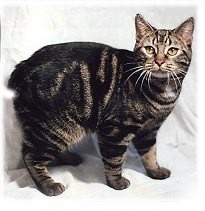
Did you know? Essentially a long-haired, tailless Manx — the name is the Welsh word for 'Welsh'.
General, species-level orientation — not veterinary advice. Every animal is an individual; your vet knows yours best.
Cymric FAQ
How long do Cymrics live?
A Cymric typically lives 8–14 years. Lifespan varies with genetics, weight, dental care, and routine veterinary checkups — good day-to-day care genuinely moves the number.
How big does a Cymric get?
Most adult Cymrics weigh around 4–6 kg. Individuals vary with sex, build, and diet, so treat this as a typical range rather than a guarantee.
Is a Cymric easy to train?
Cymrics are generally trainable with consistency and patience. As with any cat, reward-based training and early, positive socialization matter far more than breed reputation alone.
What health issues affect Cymrics?
Cymrics can be predisposed to manx syndrome (spinal and nerve defects from the tailless gene), arthritis at the tail base, and corneal dystrophy. General information, not veterinary advice — always talk to your vet.
Is a Cymric good for playdates?
Cats are territorial and social on their own terms — friendships between cats are built slowly, through scent-swapping and gradual, supervised introductions rather than forced meetings. A Cymric's confidence with new people and pets depends far more on early handling and a calm home than on breed.
How much space and activity does a Cymric need?
A small cat like a Cymric is a natural hunter who cycles between short bursts of play and long naps. Daily interactive play (wand toys, chase games), vertical space to climb, and scratching surfaces channel that energy well and keep indoor cats content.
What does everyday Cymric care look like?
Provide a clean litter box, fresh water, a complete diet, scratching outlets, and routine vet care with core vaccinations and parasite prevention. Grooming needs track the individual coat. Treat this as general guidance and lean on your vet for anything specific to your Cymric.
Can I meet Cymrics near me on Petpair?
Yes — Petpair matches cats for playdates and pedigree matches, and discovery is location-aware from the first swipe. Build a free profile for your small cat and start meeting Cymrics and other cats in your area.
Breeds similar to the Cymric
Same species, matched on size, energy, and temperament — a natural next read if the Cymric caught your eye.